

Restoring a 200-year-old ruin and creating a visitor attraction was an ambitious undertaking, one that some may have thought impossible. Yet, through the dedication and hard work of a passionate group of local volunteers, the Old Head Signal Tower has been transformed into a vibrant historical landmark.
It is a noteworthy achievement as to date the Old Head Signal Tower is the only one of eighty one similar towers built in Ireland to be restored and opened to the public. It is certain a project of this scale would not have been feasible without the enduring support of the local community, which has been a continued source of encouragement for the committee.
The Story
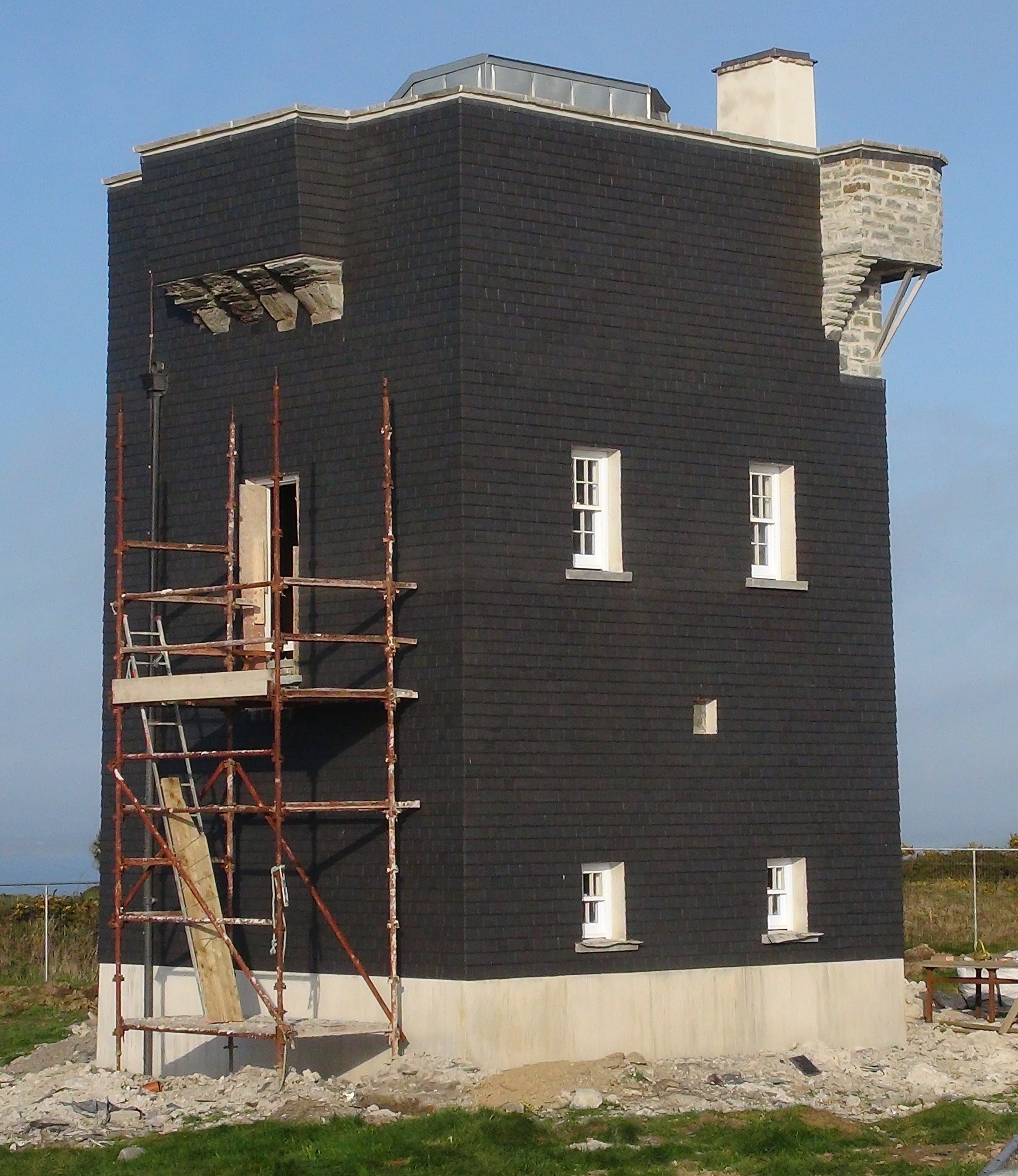
Perched at the apex of one of Ireland’s most dramatic headlands, the Old Head Signal Tower has stood watch over the Atlantic for over 200 years. Built in an age of Napoleonic threat, it became an unwitting witness to one of the twentieth century’s greatest maritime tragedies — the sinking of the RMS Lusitania in 1915.
Year of Construction
of 81 Stations in the Network
Tower Height
From the Lusitania Wreck Site
Origins
Following a failed French landing at Bantry Bay in 1796, British authorities recognised the urgent need for a coastal early-warning system. With Napoleon's forces a genuine threat, plans were drawn up in 1803 for a chain of 81 signal stations stretching the entire Irish coastline — from Pigeon House Fort in Dublin around to Malin Head in Donegal.
Between 1804 and 1806, each tower was constructed at a strategic headland, positioned within line-of-sight of the next. The system used an optical telegraph — flags, pennants and balls hoisted on tall masts — allowing information to travel the full length of Ireland's coast in minutes. Each station was staffed by a naval lieutenant, a midshipman, two signalmen and a military guard of eight to twelve men.
Station No. 25
The Old Head of Kinsale — known since antiquity, and even marked on a map by the Greek historian Ptolemy around 100 AD — was the site of Station 25. Sitting at the southernmost tip of the Wild Atlantic Way, its commanding position offered panoramic views across the very shipping lanes that would, a century later, become the site of catastrophe.
The tower's twin station to the northeast at Barry's Head (Station 24), 13.7km away, no longer survives. To the southwest, the station at Seven Heads remains visible on the skyline 13.1km distant — exactly as it would have been seen by the crew on watch here over 200 years ago.
Timeline
Plans drawn up for Ireland’s coastal signal network in response to Napoleonic threat.
Old Head Signal Tower constructed as Station 25 of 81 in the national network.
Following Napoleon’s defeat at Waterloo, the signal network is disbanded and the tower abandoned.
The RMS Lusitania is torpedoed and sinks 19km from the tower. Local people witness the disaster from the headland.
Restoration
By the late twentieth century, the tower had stood derelict for nearly 200 years. In 2010, a local volunteer group came together to restore it. Over five years, the team cleared decades of debris, re-pointed the stonework, and installed interpretive displays telling the tower's story. The restored tower opened to the public in 2015 as part of the Lusitania Museum complex, giving visitors a rare chance to step inside an authentic Napoleonic signal station.